 by adminminhdangvin
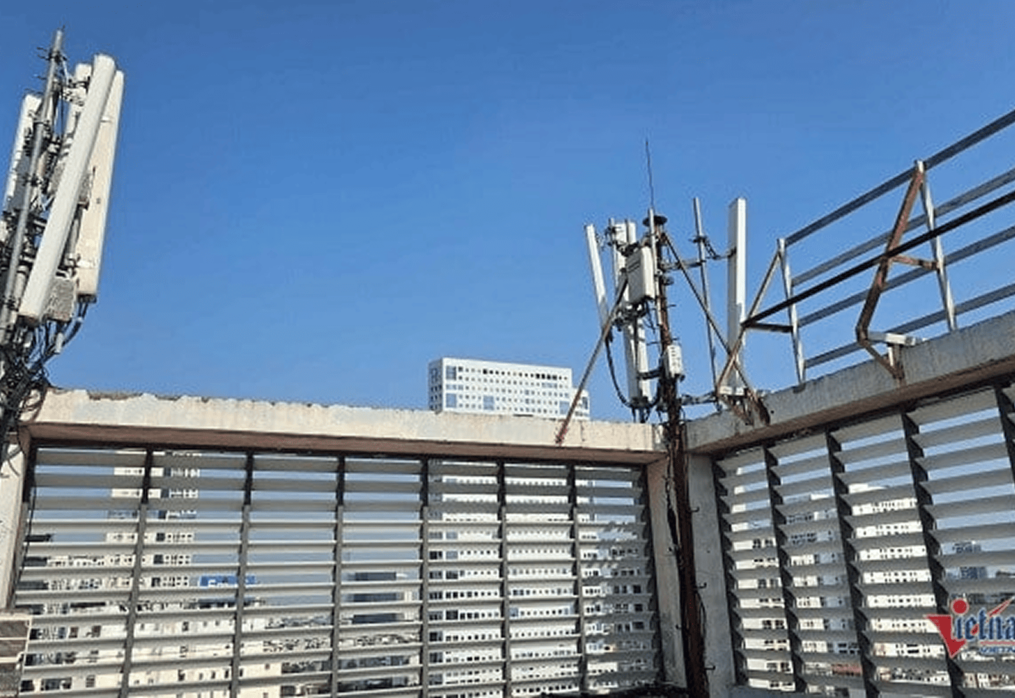
Construction of Mobile Information Transmission Stations in Nam Dinh
The Prime Minister’s Decision No. 749/QD-TTg dated June 3, 2020, approved the “National Digital Transformation Program to 2025, with an Orientation to 2030,” setting goals for the nationwide coverage of 4G and 5G mobile networks by 2025 and universal 5G services by 2030.
The program outlines specific tasks and solutions for digital infrastructure development, including spectrum reallocation, the development of 5G mobile networks, the upgrading of 4G networks, and the early commercialization of 5G technology. The planned shutdown of 2G networks in Nam Dinh province will result in approximately 379 areas with weak 3G and 4G signals, with coverage gaps ranging from 150 to 500 meters. The most affected district is Hai Hau, with 65 coverage gaps, which will impact mobile communication quality.
This issue arises because 2G signals have longer wavelengths than 3G/4G/5G signals. While 5G stations provide coverage within a range of only 20 to 100 meters, 2G/3G/4G stations using lower frequency bands can cover distances of 2 to 15 kilometers. Consequently, shutting down 2G will lead to more coverage gaps.
Additionally, the full transition of 2G devices to 4G/5G networks will increase bandwidth usage. Therefore, investing in 4G/5G base transceiver station (BTS) infrastructure is an urgent requirement to prevent communication disruptions, ensure livelihoods, and support digital transformation in the region.
To quickly address these coverage gaps, in the first half of 2024, the Department of Information and Communications (DIC) has approved 131 BTS construction sites for three telecom providers—VNPT, Viettel, and Mobifone. The department has also integrated telecom infrastructure promotion, especially BTS development, into digital literacy training programs for rural development.
The DIC has instructed telecom enterprises to work closely with local authorities and relevant agencies to raise public awareness and gain support for BTS construction. The goal is to ensure widespread 4G and 5G coverage to meet public demand while also serving disaster prevention and national security purposes.
Telecom companies have been actively enhancing technical infrastructure for 4G/5G transmission. Since the beginning of the year, 57 out of 131 approved BTS sites (43.5% of the plan) have been completed, bringing the total number of BTS stations in Nam Dinh to 1,804.
Of these, 234 BTS sites are located on public land (such as government offices and community centers), while the rest are established through rental agreements with private individuals and businesses. VNPT Nam Dinh currently manages 619 BTS stations, including 519 Macro BTS, 100 Remote, and Smallcell stations.
For 2024, VNPT Nam Dinh plans to invest in 81 new BTS, including 45 Macro BTS, 36 Remote sector BTS, and approximately 50 5G stations. In the first seven months of the year, 16 BTS (13 Macro, 3 Remote) have been built and activated. Additionally, VNPT Nam Dinh has entered into a Moran partnership with Mobifone for 15 BTS sites.
Looking ahead, VNPT Nam Dinh will continue to expand BTS infrastructure to ensure stable mobile communication services for administration, business, and daily life. Viettel Nam Dinh has identified 107 coverage gaps and plans to build 107 new 4G BTS and 227 new 5G BTS to address these issues.
Despite efforts from telecom enterprises and regulatory bodies, BTS construction has faced public opposition due to concerns over electromagnetic radiation affecting health. However, the Ministry of Information and Communications (MIC) has affirmed that studies from international organizations, including the World Health Organization (WHO) and the International Telecommunication Union (ITU), have found no conclusive evidence linking radiofrequency signals from BTS stations to adverse health effects.
Furthermore, all BTS installations undergo regulatory compliance checks before construction. Imported BTS equipment is certified by the MIC, and annual quality inspections are conducted to ensure adherence to safety standards.
To accelerate BTS deployment for economic growth and digital transformation in Nam Dinh, the DIC will work with district and city authorities to resolve construction challenges, particularly by improving public awareness of electromagnetic safety.
For regulatory and land-use concerns, the DIC will collaborate with the Department of Construction, the Department of Natural Resources and Environment, and local governments to present recommendations for adjustments to the provincial authorities.
Additionally, for sustainable telecom infrastructure development, telecom providers are encouraged to review BTS site placements to align with Nam Dinh’s 2015–2020 Telecom Infrastructure Plan and to promote shared use of telecom facilities according to the 2025 development strategy. All infrastructure expansion must comply with national regulations to ensure balanced and efficient network growth.