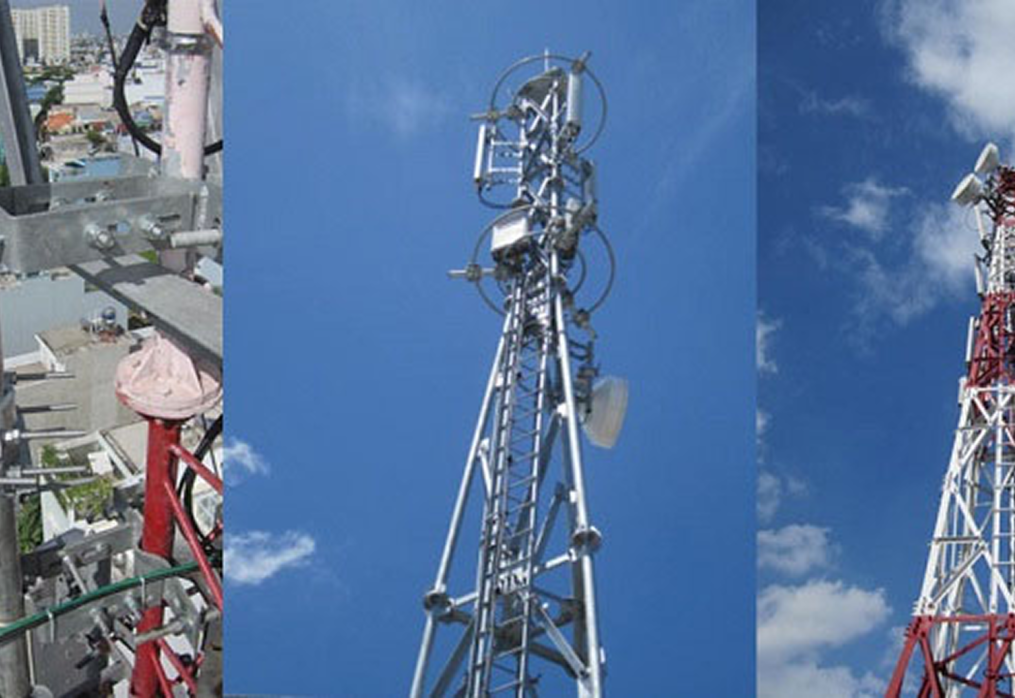
 by adminminhdangvin
Vietnam: Strengthening Supervision and Management of BTS Stations
Along with the development of telecommunications infrastructure, Vietnam has fully complied with all recommendations from international organizations such as ITU and ICNIRP to protect public health from electromagnetic waves.
As of March 2024, Vietnam had over 122 million mobile subscribers and more than 100,000 mobile base stations covering the entire country. The mobile information system plays a crucial role in connectivity and supporting socio-economic development.
Telecommunications infrastructure has a profound impact on people’s lives, accompanying them in education, work, entertainment, and daily activities. The Internet, a service provided by telecommunications infrastructure, is essential for modern life.
In ethnic minority and mountainous areas, telecommunications infrastructure, particularly BTS stations, is extremely important. It helps disseminate the policies and guidelines of the Party and State to the people in a timely manner. Moreover, the Internet enables residents to use digital platforms for production, business, and income enhancement.
Tien Yen District (Quang Ninh) is home to a large ethnic minority population. Mr. Ninh Moc Seng, who lives near a BTS station, recalls that before telecommunications infrastructure was developed, communication in the area was difficult. To contact his family, he had to travel 10 km to reach a public phone booth. The lack of communication also hindered trade and commerce, making it challenging for locals to sell their agricultural and livestock products.
Since Quang Ninh Province has prioritized investment in telecommunications infrastructure and network operators have built and installed BTS stations, the economic life of Tien Yen residents, especially in disadvantaged areas, has improved. People have learned to use social media for marketing, selling products on e-commerce platforms, and gaining knowledge for wealth creation through the Internet. As a result, the quality of life in the district has significantly improved, contributing to the socio-economic development of the province. Mr. Ninh Moc Seng also stated that he has not experienced any health issues while living near a BTS station.
Vietnam has fully adhered to all recommendations from international organizations such as ITU and ICNIRP to ensure public health protection from electromagnetic waves. Specifically, the country has issued national technical standards with stricter protection levels than many nations with high health protection standards, such as the European Union.
The management of occupational electromagnetic exposure falls under the Ministry of Health, as stipulated in Circular 21/2016/BYT, which established QCVN 21/2016/BYT – the national technical standard on high-frequency electromagnetic fields and permissible exposure levels in workplaces.
In 2022, the Ministry of Information and Communications issued QCVN 08:2022/BTTTT – the national technical standard on public exposure to electromagnetic fields from ground-based mobile base stations. Accordingly, the limit for electric field strength for the public in the frequency range from 10 MHz to 6 GHz is 27.5 V/m (as per TCVN 3718-1:2005) for non-occupational exposure.
Management of BTS Installation and Operation
Before being put into operation, all mobile base stations must comply with emission limits to ensure safety. During operation, BTS stations undergo periodic inspections, and network operators must publicly display compliance information at the station or on their websites for public supervision.
The equipment used in BTS stations (transmitters and receivers) must meet relevant technical standards before installation and operation. Additionally, all BTS stations must comply with the requirements set out in QCVN 08:2022/BTTTT before they can be activated. These requirements are defined in Circulars 16/2011/TT-BTTTT, 17/2011/TT-BTTTT, and 18/2011/TT-BTTTT, issued by the Ministry of Information and Communications on June 30, 2011, ensuring the safety of electromagnetic radiation exposure.
Planning and Construction of BTS Stations
The Ministry of Information and Communications issued Circular No. 14/2013/TT-BTTTT on June 21, 2013, guiding the planning, approval, and implementation of passive telecommunications infrastructure at the local level. This circular encourages shared use of telecommunications infrastructure to reduce costs and maintain urban aesthetics.
The Ministry has also collaborated with the Ministry of Construction to develop Joint Circular No. 15/2016/TTLT-BTTTT-BXD, which provides guidance on managing the construction of passive telecommunications infrastructure, including mobile base stations.
Based on these regulations, local authorities develop their own telecommunications infrastructure plans. During the planning process, they must seek input from relevant agencies to ensure safety, environmental protection, and national security considerations.
If there are any changes to a BTS station’s configuration, such as increased transmission power, modifications in location, height, or antenna direction that could affect the approved safety criteria, or if the certification of compliance has expired (valid for five years), the station must undergo re-evaluation.
To help the public identify BTS stations that have passed compliance inspections, regulations require that within 30 days of receiving a certification, the operator must publicly display a copy of the certification at the installation site.